Laminate flooring in Teesside
Laminate flooring in Teesside costs £15 to £30 per square metre supplied and fitted in 2026, which makes it the cheapest way to put a hard floor into a bedroom, lounge or landing. The AC rating decides whether it lasts five years or fifteen, and it stays out of bathrooms.
The value option, used in the right rooms
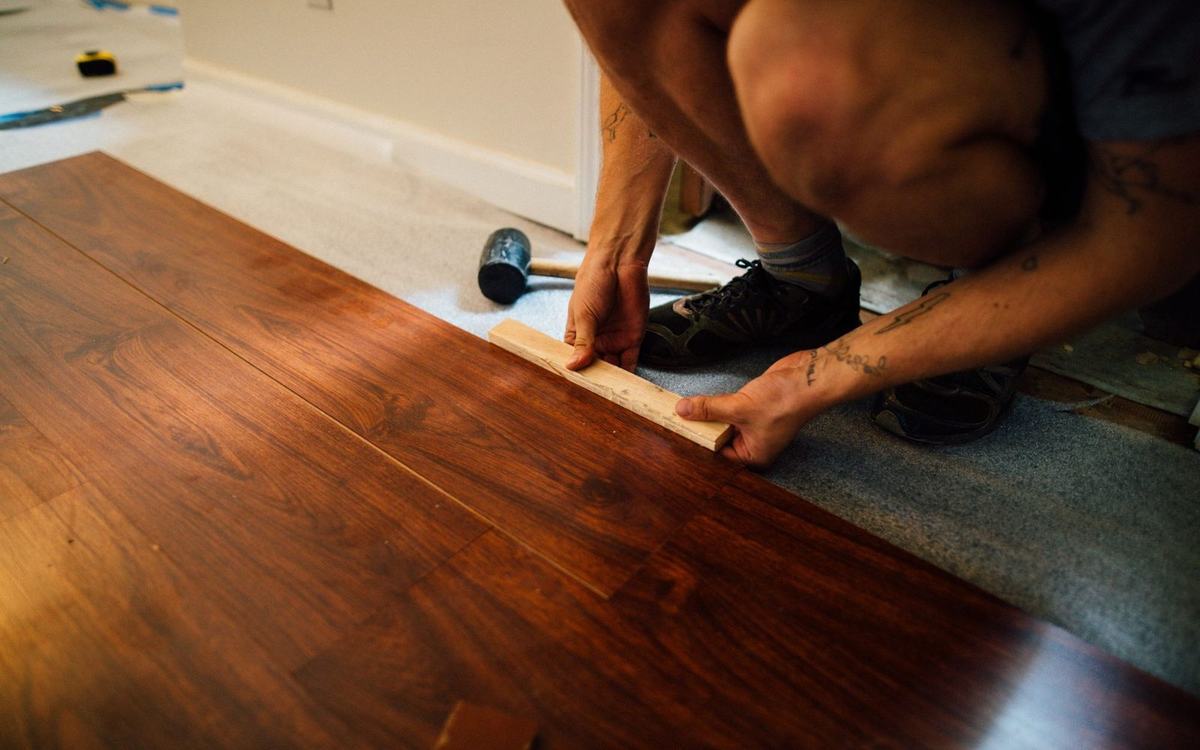
Laminate is a high-density fibreboard core with a photographic decor and a melamine wear surface, clicked together over foam underlay. It is quick to fit, easy to live with, and roughly half the cost of LVT, which is why it fills bedrooms, landings, home offices and rented properties across Teesside. It is also the floor with the worst reputation, and almost always for two avoidable reasons: someone bought the thinnest board on the shelf, or someone put it in a bathroom.
What the price covers
- Supply and fit at £15 to £30 per m²: board, foam or fibre underlay, and labour, with thickness and AC rating setting the position in the range.
- Lifting the old floor: carpet, grippers, staples and underlay out, and the tip run included.
- Expansion gaps: a perimeter gap at every wall, hidden with scotia or beading, because a laminate floor pinned tight to the skirting is a floor that will peak in the middle.
- Thresholds and doors: trims at doorways and internal doors trimmed to clear the new height.
- Acclimatisation: packs left flat in the room for 48 hours before fitting.
Read the AC rating, ignore the picture
AC3 is the domestic standard and copes with bedrooms and lounges. AC4 is worth the small uplift for a hallway, stairs landing or anywhere a dog patrols. AC5 is commercial grade and rarely needed at home. Board thickness matters separately: 7mm feels hollow and clicky, 8mm to 12mm feels far more solid and sits better over a slightly uneven base. Underlay is the cheap upgrade nobody regrets, especially in the upstairs rooms of a terrace where a fibre or rubber acoustic underlay makes a real difference to the noise carried downstairs, and over a concrete slab where a damp-proof membrane is not optional.
Where laminate suits Teesside houses
Upstairs in the interwar semis of Acklam, Norton and Billingham it is a straightforward job: lift the carpet, check the boards for movement, screw down anything loose, then underlay and lay. Over a ground-floor slab in a Thornaby or Dormanstown house, a membrane goes down first and any dip beyond about 3mm over a two-metre span gets levelled, or the joints will click and eventually fail. In rental and letting stock across TS1 to TS6, AC4 laminate in the hall and lounge with LVT in the kitchen is the standard sensible pairing.
Where it does not belong
Bathrooms, wet rooms, utility rooms and anywhere a washing machine may one day misbehave. A fibreboard core that gets wet swells at the joints and does not recover, and the repair is a new floor, not a new plank. For those rooms the honest answer is LVT or sheet vinyl. If you want real timber underfoot and the budget stretches, engineered wood is the upgrade, and the comparison guide sets out what you get for the extra money.